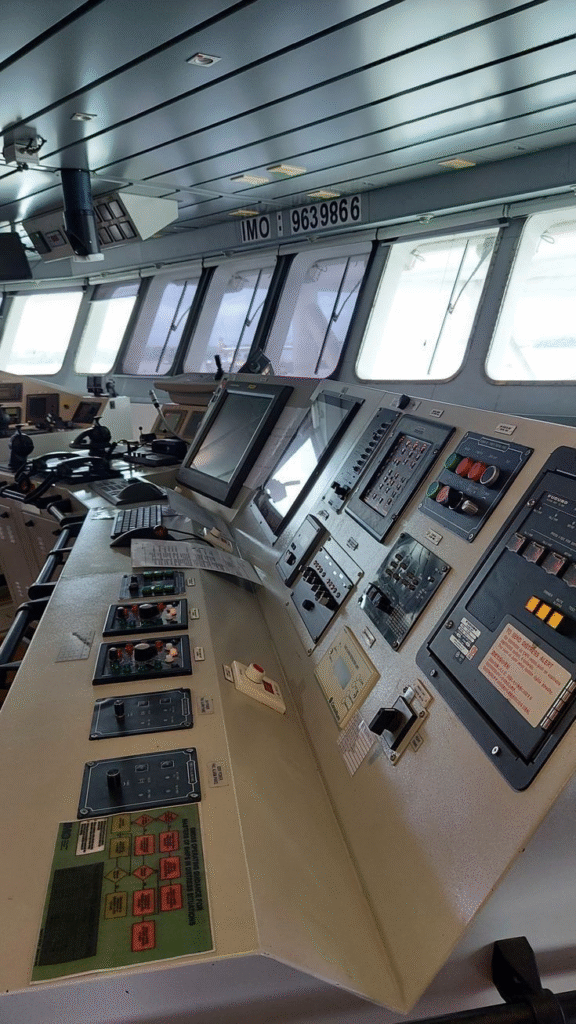
The year 2026 marks a historic “tipping point” for the maritime industry. As of January 1st, new IMO (International Maritime Organization) regulations have officially ushered in the era of S-100 Digital Standards, transforming the ship’s bridge from a cockpit into a high-performance data center.
If you are entering the Merchant Navy today, you aren’t just learning to steer a ship; you are becoming a manager of complex, automated systems.
The Shift to ECDIS 2.0 (S-100 Standard)
Until recently, digital charts (ECDIS) were essentially just “pictures” of paper charts. In 2026, the industry has shifted to the S-100 Universal Hydrographic Data Model.
- Dynamic Data Layers: Your charts now integrate real-time weather, precise water levels (S-104), and surface currents (S-111) directly onto the display.
- Under-Keel Clearance (S-129): The system automatically calculates exactly how much water is under your ship based on real-time tide data, drastically reducing the risk of grounding.
- Reduced Alarm Fatigue: New software uses AI to prioritize “Critical Alerts,” ensuring the bridge team isn’t distracted by minor notifications during high-traffic maneuvers.
AI as the “Digital Watchkeeper”
In 2026, Artificial Intelligence has moved from a concept to a standard “co-pilot” on the bridge.
- Sensor Fusion: Using a combination of Radar, LiDAR, and high-def camera streams, AI identifies small objects (like wooden fishing boats or floating containers) that traditional radar might miss.
- Predictive Collision Avoidance: The AI doesn’t just show you where other ships are; it predicts their likely path over the next 20 minutes and suggests course alterations to maintain a safe distance.
- AI-Driven Routing: AI agents now analyze satellite data to optimize your path for fuel efficiency, helping ships meet the strict 2026 Carbon Intensity Indicator (CII) targets.
The “Starlink” Effect: Total Connectivity
Connectivity has changed the social and professional life of a Deck Officer.
- LEO Satellite Networks: High-speed, low-latency internet (via Starlink and Eutelsat OneWeb) is now standard across most fleets.
- Remote Support: If a piece of equipment fails, you can now have a video call with a shore-based engineer who sees exactly what you see through Augmented Reality (AR) glasses, guiding you through the repair.
- Real-Time Logistics: Cargo manifests and “Just-in-Time” port arrivals are coordinated in real-time, reducing the time ships spend waiting at anchor.
New Mandatory Training (STCW 2026)
To match this technology, the STCW Code was updated on January 1, 2026. New officers must now demonstrate competence in:
- Maritime Cybersecurity: Protecting the ship’s navigation and engine systems from hacking or ransomware.
- Digital Literacy: Mastering the interface of S-100 compliant systems.
- Human-Machine Interaction: Learning when to trust the AI and when to take manual control—a critical safety skill in 2026.
Conclusion: The Future belongs to the “Hybrid” Mariner
The successful Deck Officer of 2026 is a “Hybrid” professional—possessing the traditional “sea-sense” of an old-school captain and the technical fluency of a software engineer.
If you are looking for Merchant Navy coaching in Sikar, visit Pacific Marine Academy today. Let us help you navigate the journey from a student to a successful mariner.
If you are looking for Merchant Navy coaching in Sikar, visit Pacific Marine Academy today. Let us help you navigate the journey from a student to a successful mariner.
https://pacificmarineacademy.com/